Showing posts with label writing. Show all posts

Thursday, June 1, 2017

The unexpected blessings of blogging daily

I blogged about Emmie, my little writing buddy.
A week ago, I decided to blog daily. Well, technically speaking, I set a goal of blogging every week day, but so far, I have posted something every day, even on the weekends. I had been neglecting my website blog lately, and I wanted to provide content on my Facebook author page. Thus, I made this goal: to post on my blog, then copy that post onto my Facebook author page daily.

Days one to three weren’t too bad. I just wrote about some things that were happening in my life, somewhat tied into writing. My background was journalism before I went into novel-writing, so it’s been fun to go back to writing short non-fiction pieces again. I also like taking photos so I use some of them for what amounts to photo-essays. By day four, however, I felt like I was running out of material. Thankfully, by the end of each day, I could usually come up with "something interesting" or “something I learned.”

My titles, so far:
-Saying yes…by saying no
-Why I didn’t write today
-My little writing buddy
-Breaking writer’s block
-A great day
-How to sprint through a manuscript
-A minimalist approach to creating

Blogging daily has blessed my life, and I wholeheartedly recommend this to those of you who want to establish a platform and strengthen your writing chops. Here are some things I have learned:
  1. It can be done.
  2. Not everything has to be earth-shattering, but surprisingly, my days have been more interesting than I expected.
  3. I became more observant so I could have material; I had more material because I was more observant.
  4. Once you commit the time, it is easier to maintain a daily blog than a sporadic blog.
  5. The daily habit of writing helped my other writing, too. It’s like priming the pump for my fiction.
  6. My Facebook author page followers liked or responded to my non-writing posts just as much, if not more, as my writing-related posts.
  7. On Facebook, I saw more engagement in terms of likes and people seeing my posts.
  8. I’ve had people share some of my what-I-learned writing posts.
  9. It’s fun to see what I can write. It’s like flash non-fiction.
  10. Adding photos (mine or I get free ones from pixabay.com) makes the post more appealing.
  11. Usually, I write in my journal (I type my entries on the computer), then use passages for my blog posts so I am not creating extra work.
Sometimes, I wonder if anyone reads my writing, or if a couple of likes is enough to justify spilling my guts out there for everyone to see. However, the way I see it, writing is transformative, not just for the reader, but for the writer. I’ll take the blessings how they come.

Thursday, March 9, 2017

A Little Tip for the Perfectionist Trying to Kill My Book

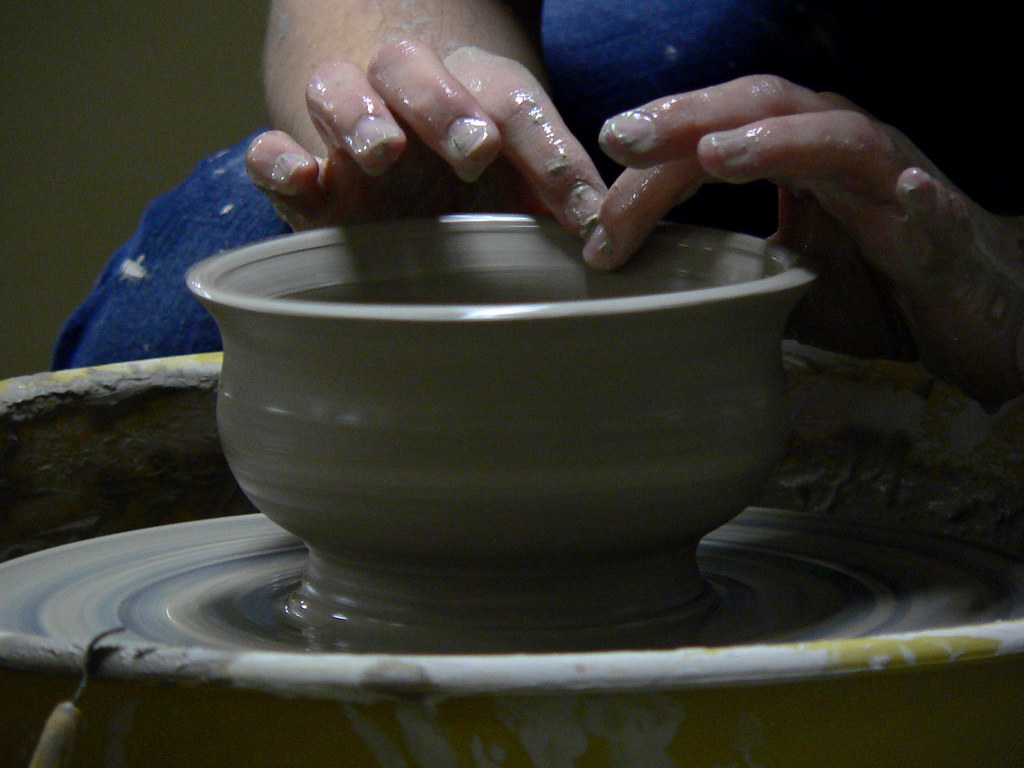
potter hands

I walk this line between incoherent creative overflow and paralyzing perfectionism. More accurately, I seem to hop back and forth over line. I don't actually get much contact with it. I believe that would be called balance. Yeah. Don't have much of that right now.

As a writer of both non-fiction and fiction, I find that I use different skills for different projects. I fight myself into structure and plotting in my fiction, jump into the story and watch it blow up around me as I run pell-mell through things and throw out my plans as some new angle appears. It's a wild ride when I abandon all editing techniques because if I stop to even fix stuff like spelling, I get stuck. My feet sink into that other side of the line. Perfectionism. Even a sentence can turn into an hour long project. I can't risk getting there or I will NEVER FINISH my first drafts.

Usually with non-fiction, this isn't such a struggle. I make an outline and then write it out. Until this time.

I'm being sucked down this drain in to the darkness of anxiety and perfectionism. What if I write the wrong thing?

I know I need to write! I've felt inspiration, the pulling tug of God telling me this is something He would like me to do. It will make a difference to someone.

But instead of writing I binge watch Chinese romantic dramas.

Last week I told myself I had to get on top of this. Instead of writing, I grabbed my scriptures, searching for inspiration.

The book fell open to Jeremiah 18:2-6.

"Arise, and go down to the potter's house, and there I will cause thee to hear my words. 
Then I went down to the potter's house, and, behold, he wrought a work on the wheels. 
And the vessel that he made of clay was marred in the hand of the potter: so he made it again, another vessel, as seemed good to the potter to make it. 
Then the word of the Lord came unto me saying, 
O house of Israel, cannot I do with you as this potter? saith the Lord. Behold, as the clay is in the potter's hand, so are ye in mine hand, O house of Israel."

Okay. It was almost funny in a way.

Regardless of what this was originally intended to mean, for me, that night, it was suddenly clear that the Lord was telling me to stop being afraid of doing the wrong thing and to just write! I needed to get something down and then, like the potter, couldn't I fix my mistakes later? Wasn't I in the Lord's hands? Couldn't he show me how to fix things too? But not if I didn't put something down first. I had to write.

That's my goal now. I tell myself: "Put something down. We can fix it later." And honestly, if God is going to be one of my editors, things will work out just fine.

Thursday, January 12, 2017

Be Sincere

Me, After Falling off a Mountain Bike my Freshman Year 

Freshman year of college: the first line of A Tale of Two Cities come to life, the best and the worst, squished up in eight months running by on fast forward. I am a confident eighteen-year-old when I arrive, a battle-worn, insecure nineteen-year-old when I leave. Nothing will ever be the same.

I sat in the bishop's office that September and received my first calling as an official adult: ward missionary. The words of the blessing I received when I was set apart still ripple through the events that followed like an echoing mantra.  Be sincere.

Sincerity. Dropping down from the superficial place of rules, and rote motions, into the nitty-gritty of life. Exploring the rawness of the human experience in a way that can't leave you unmarked. The only way I could reach God's children as a missionary. Diving in took me from room to room, place to place until that time is an "everything has changed" moment, the fall-back point I still return to after nearly twelve years. Be sincere.

We can't help if we don't see people, if we don't let ourselves be touched by their experiences. We can't give of ourselves if we are protecting ourselves.

It's watching the ones I love struggle. Wanting to give them the gospel, but knowing it's not time yet. It's inadequacy, crying harder than I ever had in my life, and hurting someone even though I tried everything I could not to. It's getting sick, winter depression, and anxiety attacks on the steps outside the dorms. It's the parking lot in mid-day, couched by a sobbing friend who's world had been split through and crumpled up. The worst of times.

It's first love, piles of leaves, rainfall, and sketching on the quad. Music, paper mache balloons, and the safety of my friend, Anne's, bedroom day after day. It's standing in front of a life-size painting of Christ and being moved in a way I'd never experienced, feeling the veil thin in the loneliness of learning of my cousin's passing, and telling God I would let Him lead me to wherever He wanted me to go. The best of times.

It's going home for the summer, and not realizing I wouldn't go back. A single experience, gone. There'd been no time to waste on anything but being sincere.

No time to waste.

In the last few weeks, I sketched over my outline for my newest non-fiction book. I struggled to fill in the gaps, the ever lingering left-over pages. What did God want me to do with this book? How could I make it worth something to someone?

The answer came at writer's group, simple and familiar. It is to peel back the wall between me and my reader, exposing the person underneath the words. It's letting the person I am, and the girl that I was enter the pages and bleed out a little. God made me me for a reason. I can't wall-up myself and help the way I need to. The words are on replay, echoing to me with colors of freshman year.  Be sincere. There are no pages to waste, no words to loose.

Thursday, December 8, 2016

When I Decided to Stop Writing

I Will Make You Fishers of Men

  “So the core landscape of history has been sketched by the pen and brush and words of those who invoke a divine creator’s involvement in our lives and who count on the ligatures of religion to bind up our wounds and help us hold things together.” 
-Elder Holland, "Bond by Loving Ties," Education Week 2016

I woke up two Saturdays ago and for the first time in eight years, I told myself I didn’t have to keep writing. I didn’t have to keep doing this to myself.  The life-crippling anxiety over publication schedules and being good enough or having smart or clever enough ideas, the online marketing, the need to produce something worth reading and then edit it and edit it again, all that, I didn’t have to do.

I read some middle grade and high school entries for Reflections a few weeks ago. Holding their raw words in my hands, it was as if I juggled pieces of aspirations, wishes, and hopes. I didn’t want to put a ranked number on that. How could I tell the girl who so openly shared her experiences with sexual abuse, a drug-addicted mother, and cutting, all before age thirteen, that because she didn’t have as good a grasp on language arts as the other kids in her category, her story wasn’t going to make it beyond the library where I sat reading it?

Maybe that experience was a step to where I was Saturday morning, remembering writing as the gift that saved me, wishing to go back to that time when I wrote, not because I needed to share things inside myself, but because I needed to meet myself. When did I decide I had to share, and why, after so many years, had I never looked back? Why had I kept putting myself, my flaws, my failures, out there for everyone to see? Why had I decided this was something I had to do? 

I turned writing over inside me, and really imagined life without it. I wanted to ask God if maybe it was time to give it up. Was this what I needed to free myself from what I saw as a trigger for failure in other areas of my life? 

On Sunday, I read Elder Holland's talk, The First Great Commandment from October, 2012 about the Twelve Apostles after Jesus Christ’s death, resurrection and ascension. I read about them giving up and going back fishing, and how the Savior found them and called them to the work a second time. 

As I read, I realized I couldn’t give up writing, not if I truly loved my Savior. I sort of knew that all along. I just needed to be reminded.

Writing is and has always been, a way God uses me to reach other people and help them. We all have strengths, ways our talents can help others. As safe and reassuring as it sounded to retreat to that place where I could be alone with my writing again, it was too much like the man who buried his talent, too much like the Apostles going back to fishing.

With God it’s never about just one soul. We are all interconnected. God gives us gifts. Sometimes the ability to write, or draw, or sing. Sometimes He gives us experiences that teach us love, joy, hurt, pain, or empathy. We experience, create, grow, and then He sends us out to help each other.

The words those teenagers wrote have changed me, even if no one else ever reads them. Like the thirteen-year-old girl who's story I can't forget, I cannot reach everyone with my words. Sometimes my stories stop with one or two readers. Jesus Christ alone knows how to reach everyone, and He sends the right people out to bring someone to Him. Where I cannot not reach with my stories, someone else can reach with theirs.

God is not up there keeping track of my forgotten comas and misspellings. He’s not even recording a list of the plot holes or character issues I didn’t fix the way a better author might. He teaches me a step at a time. From the beginning, He’s been using all I can give him, and turning it to good in miraculous ways. Even if what I give is imperfect, His grace gets me to the places He wants me to go.

This is why I haven’t considered stopping before. I know what I have isn’t perfect. I know it’s limited and childish, and I still have so much to learn.

But it’s His.

My gift is His. I will do everything I can to do something good with it. I will walk through the hard stuff, the “tear it apart and write it again” stuff, the “oops, I can’t believe I missed that detail” stuff. I will keep learning, keep walking, and I won’t be afraid of the future I can’t see yet.

I’ll do it so someday, the door that will open to me will reveal a thirteen-year-old girl who doesn’t think she can make it one more day on her own. My written words will be the words that God plants in her heart. She will reach out and I will, in my flawed, limited, author-like way, put her hand in His.

I’ve been blessed by His love. I’ve been changed by Him. I won’t look back. I won’t quit. I will do it for her. I will do it for Him. It’s no longer enough to do it for me.

Tuesday, December 6, 2016

Can your Romance Stand Alone?

A Tribute to the Clean, Proper and Sweet.
and compelling, gritty, tense, angst ridden, smart and fun.

As a historical romance writer of clean fiction, I get asked every so often, "Is there a market for clean romance?"

When I tell them, most exuberantly YES! Many adults nod their heads gratefully. "Great! Let me know when your first book is available."

But sometimes a well meaning friend will ask, "Who's your market? Teenagers? Middle Schoolers?"

So I thought I would explain why I write clean romance, why the market, especially among adults, is growing, and why it proves to be better, more compelling literature than its steamier erotic sister.

1. Often, it is just plain better writing. Steamy scenes can be a crutch. Sex sells to its audience, but remember it has a specific audience, not an all-encompassing one. The temptation to go from one such scene to the next with only a weak plot in between is too much to resist for some writers. AND take note, even if the scene or plot naturally calls for such a scene, even if it has a purpose and is character driven and important to the story, the sex immediately ruins the story, because the story can morph into a plot about the sex.

Where the story used to flow in a happy progression, characters interacting in subtle and hinty ways, rising toward a climax unrelated to any physical act; instead, the story fires up all the receptors at once, climaxes in a different way, and then completes, stops, and leaves us hungry for more: but not in a hooky, story-thirst kind of way, more in an unhealthy, outside the story, physical kind of way.

Just like the gentle touch on your hand, fingers lacing together sends thrills of expectation up and down your arm; once you kiss, the hand holding is nice, but you hunger for the kiss. Also in a romance, once you include a sex scene, everything else dulls because it cannot measure up, and the story escalates from one hot moment to the next. The story, the romantic arc, the plot points, are not powerful or compelling enough to keep up.

2. Where the sex might ruin a story, the suggestion of it, the anticipation , the desire and yearning for it can make a story, lead a story and romantic arc for a hundred pages or more without anyone tiring. The thirst is far more compelling than the satisfaction. A hint of more, even a clear understanding of white-hot madness going on behind a door that remains closed to you, leaves far more to the imagination than a detailed, play by play of the action. Anticipation and yearning, aren't those the things that turn pages? Don't we write hooks and cliff hangers for a reason? Unrealized sexual desire is the ultimate hook of all time.

But what if you as a reader thirst for a whole book and there is never any fulfillment? This is where clean romance sings.

3. THE SECRET: Emotional fulfillment is far more satisfying than physical fulfillment. And if you can accomplish true emotional fulfillment, where hero and heroine come together in a way you never thought possible, in a perfect blend of a whole, completing each other in just the right ways, the audience leaves feeling far more rewarded than if they had tangled up in someone's sheets for a scene or two. And here is where steamy romances often fall short. So much physical fulfillment is reached that the other aspects of the relationship can feel neglected or superficial. Again, better story, better writing if you leave all that out. And I submit that unless you are reading erotica, as a reader, you really are reading more for emotional fulfillment than for physical.

4. Personal reason number four. I think art should stay away from interpreting our most sacred expression of love. The holy moments shared in complete intimacy are better in real life when untainted by interference from the imaginations of others.

5. As a historical writer, is your philandering time-period appropriate? It pains me to read Regency romances with open groping and closet make-outs, and sex between nobles. None of that is time period appropriate. The heroes and heroines not only do not act in a manner appropriate for the time, but they don't think like a hero would in that day. Attention authors: most married couples did not even share the same bedroom--Intimacy was not discussed, not referenced, not public in any way. If handled any differently in the next Regency you pick up, the character's ideas and passions are obviously modern and historically inaccurate.  And that grates the historian in me. Note: My books have some really really fun kissing, but it's secret, or accidental, or married, or shocking or otherwise appropriate for the time.

And, the key, the clincher:

Ask yourself, can your romance stand alone? Is your story good enough that your audience would read it with or without any steamy scenes at all?


So, yes, there is a market for clean romance. The market is large and consistent and reliable, and it is growing. The authors are well known and established, many bestsellers with bids for movies. Just one Goodreads group has over twenty thousand clean romance books listed in it. And the market is larger and farther reaching than the inspirational lines of books that you would expect, larger than the Christian publishers. For example, Harlequin has a line of clean romance.

AND there is a growing adult audience that actively seeks  nice, fun, compelling romance with no sex. Pay attention to the past success of Clean Flicks and now Vid Angel. Media in all forms is neglecting a paying, large audience of adults who would prefer a cleaned up version of excellent entertainment. Also in literature, at the time of my writing this list, Amazon has a category called, "Clean and Wholesome Romance" with 5,894 books currently listed. A quick scroll through the first page of the list showed many five star options with reviews in the hundreds. Multiple best sellers are available with publishers who are actively seeking clean and proper romance.

As readers, we can seek them out, praise authors in our reviews and pay attention to the excellent stories that are told without crutch or gratuitous device. I hope we will, because it will only further draw attention to a growing, marketable and lucrative sub-genre.


Thursday, December 1, 2016

How to write stress-free during the Christmas season


The wreaths I made for my office
by Jewel Allen

It was the perfect set-up for that illness that inevitably strikes overachievers before Christmas.  Long days at the computer, late nights already at holiday parties, and a punishing self-imposed deadline. Last night, I came down with a cold and cough. Fortunately, the only thing on my to-do list this morning was delivering rolls (which my husband sweetly bought for me already last night) for a funeral. After sneaking the rolls over in my jammies to the Relief Society president, I went back to bed. It felt good to sleep in. I then spent most of the morning decorating the house for Christmas. By the time two o’clock rolled around, I was ready to tackle edits on my manuscript. I also felt so much better. My fortunately quick recovery inspired me to think of some ways writers can write stress-free through the holidays.

1.Be realistic. It is good to set goals and still keep working on your manuscript so that you don’t lose your momentum. But maybe scaling back on your page or word count is necessary so that you can still check it off your list that day.

2.Spend a morning doing Christmas things. I had the materials to make two small wreaths and hankered to hang them on my double French office doors. I felt kind of guilty that instead of writing, I was channeling Martha Stewart. But I am so glad I did it. That pine scent...mmm. Plus every time I enter my office and sit at my desk, I see this wreath and I am just filled with sensory happiness.

3.Play Christmas music. I know, it’s distracting to write to music with lyrics. Especially Christmas music if you aren't writing something Christmas-y. But Christmas music can also lift your mood. I played music all day today, and it was lovely. It almost made me want to write a Christmas scene into my historical novel just so I can capture the warm and fuzzies of the holiday season. But then, I thought, no more research. Maybe I will just have to write a Christmas novella sometime.

4.Take a break. Give yourself permission to sleep in. Sleep is good. I wasn’t doing NaNoWriMo this year, so I had the luxury of not writing over the Thanksgiving weekend (which technically speaking is the start of the Christmas season). I slept in. Just did things I felt like. It was heavenly as a flannel blanket fresh out of the dryer. When I was ready to tackle my manuscript on Monday, I was raring to go.

5.Go outside. Soak in some sun and fresh air to avoid the dreaded winter blues. Bundle up and take a brisk walk. Make a snowman. Shovel the driveway. You’ll feel better afterwards, I promise.

6.Enjoy your family. My daughter is coming home for Christmas. I am soooo looking forward to it. My writing output will probably go to pot. But that’s okay. Time with family is always worth it. If you still want to write, communicate your goals with your family and make sure you are able to spend some time with them still.

7.Attend parties. Writers are guilty of being hermit-like when it comes to parties. Attend parties and talk to people. Consider the conversations as book research. It is also great for networking. You never know who you might meet. If nothing else, you’ll get to sample all sorts of yummy food.

8.Simplify. On the flipside, don’t feel like you have to attend every single social event, bake a gazillion cookies, or participate in all sorts of charity groups. Pick a few or none and call it good. Everyone else is in slow-down mode. Give yourself permission to scale back, too.

9.Write a gratitude list. I don’t know about you, but last week, the winter blues hit me bad. I felt like all my troubles came down like a bad snowstorm and I couldn’t dig myself out. The antidote: a Family Home Evening spent writing down things we were grateful for. Really, when you look at it, things aren’t as bad as you think. There is so much to be grateful for.

10.Indulge in color and laughter and happiness. We can make Christmas how we want it to be. Christmas can be a chore, or it can be a blessing, depending on how we look at it. Decide now to allow the good things to rise to the top. And that includes our writing.

What a blessing it is to be a writer in this day and age. Years and years ago, someone decided to write the greatest story ever told – the birth of Jesus Christ. So write on, friends, and have a wonderful and blessed Christmas! See you after the holidays!

Jewel Allen is an author and ghostwriter. She has two books out, the paranormal mystery Ghost Moon Night and a political memoir, Soapbox. Visit her at www.jewelallen.com.

Thursday, November 10, 2016

Filling the Empty Space Inside Me


A month after my miscarriage, I lifted my head and peeked out at the world around me. I wrote a blog and admitted I’d been sucked into a strange, dark place. After writing it down, I decided to return to life. Maybe I thought: now that it’s out there, I can move on, heal. Written words are often little echoes of the things I feel inside me, the things I can’t understand until I see them written out before me.

I might as well still be eleven when it comes to needing to see my words. Only now I use this laptop instead of pencil and paper. Blogging helped me, writing helped. Returning to life was freedom, hope. I tapped out words and more words, filling in the gaps left in the LDS teen novel I’m working on, ready to face a future of possibilities.

And then I miscarried again.

The day it happened, I tried to pretend it wasn’t. I didn’t want to go back. I’d been there. It was dark. Empty. Lonely. And so many things I didn’t understand at all.

People wanted to fix me. Maybe this will help, or that. My friend tired this. But I wanted to let it all go. I wanted to live like another child wasn’t tightly wound around my happiness. I wanted to be strong.

I poured myself into my book. I stayed up all night. I was going to finish it. I wouldn’t let another miscarriage put me more behind. I would move on, and it would be easier this time.

It was only after a week of this—when the pulse of my story world faded under the tender touch of the Holy Spirit on the sound of primary songs—that I found out I was not okay.

I’d been filling up my book with words, but I was still empty. So, so empty.

The answers were around me, little whispers left by my Heavenly Father that I’d yet to explore beyond the muted sound of His Spirit’s voice. He’d been speaking, but I’d been writing, writing, writing.

Four days after miscarrying, I took my nine-year-old son to walk the Provo Temple grounds. The Spirit bubbled out on his words, “I’m so happy, Mom. Why am I so happy?”

His joy was beautiful to me, but I found myself wishing that the flowerbeds we passed hadn’t been emptied already. They were also beautiful just weeks before. Now nothing but dark earth remained. We circled to the fountains at the front of the temple and sat watching the sunset, a large, empty flowerbed directly before us.

My thoughts converged. I’m empty too. Will something like flowers eventually grow in the spaces that have been dug out of me? What could I learn by seeing myself as empty as those beds? Was it simple hope in something coming someday? A distant Spring I’d been prepared for?

A memory of snow came, of walking up to the Provo Temple in the dark of last winter and seeing that very flowerbed in front of me filled, not with flowers, or bushes, but with a Nativity.

This was the place where they put the Christ Child at Christmas.

The bed was empty for Him.

The truth of that thought stayed with me. I held it tucked inside, a soft burning light that didn’t lose or gain anything for weeks. Since then, I’ve waded through the ups and downs of emotions, and more than anything, waves of unhealthy anxiety and anger. I’ve been drowning in unreasonable guilt and worry.

At our ward Halloween party, I found myself confiding in friend. I wished at once that I hadn’t said anything, but her love for me wasn’t uncomfortable or awkward. She didn’t try to fix me. She listened. She shared her personal experience without making me feel judged. Her love, somehow, freed me again.

I went home and every time my anxiety tried to horrify me with the thought of, “What were you thinking telling her!” I replaced that thought with a prayer. “Father, thank you so much for Sister Tolman.”

And the light inside me grew warmer.

I read conference talks, went to the temple, sat in my living room pondering, and returned to a pen and paper to write out my thoughts. I studied how to put the Savior at the center of my life. I stood in the warmth of an autumn darkness as my children played with flashlights in the backyard, and I laughed freely for the first time in a month. My burden lifted. I told Him I was ready for Him to take it. I needed Him to take it.

I breathed.

And I kept writing.

I’m empty. No child grows within me. The spaces inside me have been hallowed out by loss and then rubbed raw. I’m broken a little, and oddly enough, the title of the book I’ve been writing so obsessively is Break. But when things are broken, that is when the Savior finds His space.

These places inside me are empty for Him.

I know Him a little better now. I believe Him a little deeper. I love Him a little stronger.

My healing is in Him. Not so empty, not so lost. I am not alone. My night has been full of angels and flickering lights of hope. Darkness can be warm and beautiful too. It was, after all, night when the angels appeared to the shepherds. And under a starry sky, the wise men searched until they found their Savior.

Thursday, August 25, 2016

Voice

(Photo Credit: Google Image)
I have a short list of names here that I’d like you to find the common factor among these people (read: one thing they have in common). Simple, right? Okay, let’s go. 

1.     ABBA (Agnetha Fältskog, Björn Ulvaeus, Benny Andersson, and Anni-Frid Lyngstad)

2.     Jack Black. 

3.     Peter Cetera. 

4.     Morgan Freeman. 

5.     Michael Jackson.

6.     James Earl Jones. 

Have you noticed? Have you spotted that “one thing” they all share in common other than the fact that they’re all somewhat famous media entertainers?

Yes?

Did you say . . . they all have distinctive voices, like I knew you were going to say? Like I knew if you heard any one of these artists’ voice on the radio you’d undoubtedly recognize it, shouting, “Oh, that’s ABBA!” or “Hey, that’s Jack Black!” or “That’s Peter Cetera, Morgan Freeman, Michael Jackson, and James Earl Jones! Wow! How did they get all the most distinctive voices together like they did in We Are the World?”

Remember We Are the World? (If, for any reason, you don’t, please watch this youtube video, provided for your convenience, before reading the rest of the article. Thanks.)


Remember in 1985 when the Billboard #1 single U.S. A. for Africa––We Are the World came out and shook the world with the emotional collective superpower of the most popular 80s American pop singers? Without watching the video, can you honestly know which singer sang what part of the lyric? Maybe. Maybe not. But in the chorus, can you correctly identify any of the distinctive voice that belongs to a specific individual? 

I know you’re thinking, “What kind of stupid question is that? It’s a chorus. Everybody’s voice is blended together. How do you identify anyone’s voice?”

You’re right. You’re right. 

Considering the nature of a chorus, it’s understandable that for a non-singer like me I feel safe to lip-sync in a chorus, to hide my croaking, breathless, off-key voice. To shamelessly, guiltlessly, deliberately turn myself audibly non-existent. 

So, back to the famous song We Are the World, we see that undeniably, even for Michael Jackson and his gloriously distinguished voice it’s difficult to stand out in the crowd.  

It’s the same in writing. 

There’re some gifted writers who possess distinguished literary voices. And here, I have a (somewhat biased version of the) short list: 

1.     First and foremost––Frank McCourt, no doubt. *kowtows* 

2.     Elizabeth Gilbert. *bows*

3.     Anne Lamott. *salutes*

4.     Cheryl Strayed. *applauds*

5.     Mary Karr. *nods*

Sometimes I stumbled upon a piece of personal essay or a blog post and was surprised to detect a portion of the text following similar pattern, or mimicking similar style, of famous writers like Frank McCourt or Elizabeth Gilbert of Anne Lamott or Cheryl Strayed or Mary Karr. Which is fine. Writing is an art of imitation. We all learn from others to improve our own craft. But what I discovered in those essays and articles was inconsistency, meaning, discord in text. They were like various writers shouting out to the reader in different paragraphs, making it read like a literary patchwork. And I wondered what the writer’s original voice sounded like, if he hadn’t accidentally (?) drowned it in the chorus of New York Times bestsellers. Maybe his voice is strikingly captivating but we’ll never know. We won’t get to hear and appreciate and fall in love with it because it’s still buried in the chorus. 

So I bring the questions to you:

Is your writing voice standing tall and strong on its own feet? 

Is your writing voice singing solo, loud and proud, like a lion's ferocious roar? 

My hope is that you will allow your writing voice to be so distinctive and unique––as it is––that when a reader sees a sentence you’ve written, he immediately recognizes, “Aw, that’s my favorite author. I just know.”

Allison


Blog: Allison Hong-Merrill
Facebook: Allison Hong-Merrill
Twitter: @xieshou
Instagram: @jijenmerrill


Tuesday, July 19, 2016

"Forgetting is an editing principle. You only remember the important things." (A writing lesson from Aleksander Hemon)

The view of Barcelona from our cable car while travelling up to Montjuic.


I always knew that if I went back to school it would be to get a degree in creative writing. That's how I ended up in the Cedar Crest College Pan-European MFA program. That's how I ended up in Barcelona in 2014.

Port de Barcelona


When I wasn't bingeing on gelato and calamari, I was immersed into the culture (religion, architecture, pop-culture, art, language, and literature) of Catalonia.

How much gelato is too much gelato? 

On weekdays I attended classes at Ateneu Barcelones where lessons ranged from writing in the vernacular to flash fiction. My professors, who I had already anticipated would be great, BLEW MY MIND. (When I explain it to my family and friends, I literally do the explosion gesture off my temples.)

The Spirit of Montserrat


One such professor was Aleksander Hemon, author of The Book of My Lives and The Lazarus Project. He also writes for The New Yorker and showed up to class in shorts and a grey tee with two pigeons printed on front. More than once he dropped the cap of his dry-erase marker, and more than once he nicked his shirt with the ink tip. Erasing it smudged the spot.

Aleksander Hemon and a list of themes he pulled from someone's 20pp manuscript. Whoa.

I wish I could've captured every last word from his mouth and bottled it to chug like some sort of writing Mt. Dew. But since he's a native of Sarajevo, I had a two-second delay interpreting his accent. This'll have to do.

  • Consider having an organizing principle or composite structure to your piece. Make it a shape.
  • As writers, we can only represent one part of humanity. Much of literature does just that.  
  • Literature gives a window into humanity that no other vehicle can. 
  • Can you add metonymy? A part to represent the whole? 
  • Literature helps us understand something about the human mind and appreciate the artifice or "cathedral". 
  • We build "cathedrals" so that we can draw people to the emotion. 
Sagrada Familia
  • "Language is biological." 
  • "We are composite people."
  • "Discontinuity is the default way to process the world. It's an acquired skill to put it together."
  • Imposing order on the chaos is what literature does.
  • We create to compensate for the things we can't forget. 
  • In life, in non-fiction, forgetting is an editing principle. You only remember the important things. The remaining montage is the story. 
Where I wrote. The library at Ateneu Barcelones
  • "We are not passive, especially as writers. We create culture."
  • For memoirs, lay down the memories you feel compelled to write. You'll gravitate to some scenes. Enter the space and spend time there. Motifs will rise from the words. Organize by delineating and select "furniture" to go with the space. 
  • "Nostalgia has the veneer or sheen that life was better".
  • When writing, remember that "it's all [crap] until it isn't. Editing requires stamina. And we're entitled to our failures."
The castle at Monjuic
Apply these to your life or writing as needed.

Much love, 

Rena

Thursday, June 9, 2016

A Discovery of Imperfection

My life is messy.

I avoid cleaning even though I know shouldn’t. I want clear counters, clean floors, and neatly folded laundry, but when I do engage in chores, I turn perfectionist. I line up everything in organized stacks, following a never ending cycle of tangents and distractions that bring cleanliness to unseen cracks but leave the spaghetti-stained pans in the sink.

It’s exhausting, and it never stays.

It spills over, tips over, runs over until I’m standing on a black-marked floor staring at another pile of dishes, and wishing I could get in my bed without throwing the unfolded clothes on the floor.

I’m left in this maddening place of imperfection. Even the characters I pull and prod through the ups and downs of a story can’t make of themselves anymore perfection than I can give them. They’re hopelessly, terribly flawed—ink stains on my thoughts and fingertips.

I crave continuity and cohesiveness—the right words coming together in the perfect form to create something so beautiful there’s nothing left to say. I want it in my stories. I want it in my life. The inner parts of my heart are craving a home I once knew that was perfect and a life I once walked where my skills and abilities flourished under the tutelage of a Father who is God.

I don’t think I’m the only one.

Maybe the absolutes I face in the cries of politics, fads, and opinions are actually all of us clinging to things we hope are permanent, unchanging truths. We want rightness. We want the answers. We used to have them. Our little embryo-like spirits were once nourished in a place of light, truth and love. The reflection of that is still inside us, hungry for a confidence we once had.

So we rail and shout, dismiss and hurt each other in a search for perfection. We wrangle all the parts of us and others into categories and try to fill ourselves with self-righteousness to counteract the panic we feel when we step back and see how unfair and crazy this place we are in really is. We want to make it right. We know in our hearts that it can be.

Why did our Perfect Father send us here? How can He continue to send more children to us: imperfect parents with our hands already too full of heath food pamphlets and warning labels? What was the reason for all this?

The line is always drawn straight between fear and love. We can’t have them both at once.

And if God didn’t send us here to bathe in our fears, to wallow in the avalanche of insecurities, then the other side has to be He sent us here to find love.

Nothing stays, my children grow. The people I love die. The friends I make move. I move. I leave behind bits of my heart, scattered among faces and people and days I cannot count as anything but glimpses of heaven, even when the loosing, and growing, and moving hurts so badly I think it will swallow me.

I see then God has not sent me here to live in perfection. I had that once. I know it already. He has not sent me here to sink into despair and lose myself either. Feeling sorrow, pain, loneliness, and anger in all their hideous, soul-wrenching beauty is how I come to understand love.

It’s how I find an inexhaustible spring of love inside myself—an endless capacity for compassion, empathy, and understanding. It’s how I am weaved into your story and you into mine.

My hope falls into place around that single thought. Peace returns to the things I care most about. I find courage in reloading a dishwasher and sweeping a floor one more time. Courage in the idea that I can put something back again, and again, and again if I need too. It can always be cleaned, repaired or replaced.

I can always repent.

The parts of my heart I leave behind are never wasted.

And if I create an imperfect book, I can find the courage to keep writing despite that. It’s okay to give what I have in the hope that it helps one person find a bit more love.

Leave it all in God’s hands, where broken things are made perfect again.


Thursday, May 26, 2016

Age Is a Number

(Photo Credit: Google Image)

When I was little and my father was teaching me to count, he stopped at 100 and I thought 1 to 100 were all the numbers in the universe. 

Consequently, when I applied that misconception to human age, it seemed incredibly dubious that people could live past the astronomical age of 50. I was 4, and only had enough attention span and brain to count to 50. I was convinced that 50 human years were about as long as anyone should reasonably live. 

"Because past 50 you're gonna run out of numbers to live. It just gets too hard to keep track of all the years. You won't remember how old you are." The four-year-old me would want you to know. "If you can't remember how old you are, then you're like––dead." I would extend both of my hands, palms heavenward, and frown. 

Needless to say, when my grandmother celebrated her 50th birthday, I was petrified with fear that she might die anytime. I made sure to be extra good at her house, so not to ruin her last days. 

My grandmother passed away a few months ago at the glorious age of 91, busting my childhood myth. Ironically, it was her daughter––my mother––who passed away on her 50th birthday, and I don't wish my childhood myth to be confirmed by anyone ever again. 

Fifty is a young age. Holy cow, I'm almost 50! And the thing is, the older I get, the more I want to do––to accomplish, to achieve––in life. One of which has always been going back to school. 

School is not only for the young. It's for the young at heart, too. Last winter I was accepted into the MFA in Writing program at Vermont College of Fine Arts. On the fist day of school, I was in the new students orientation when the oldest classmate was introduced: 91-year-old John*––a retired physician. 

"I've always wanted to do this, to learn to write," he said. "I'm so thrilled I finally get to do it."

He has all the physical features of a 91-year-old man: gray, wrinkled, hunchbacked––all that, and the determination of a 19-year-old boy. Watching him walk to every classes with a backpack behind him, slowly, carefully on the slippery, wintery Vermont sidewalk, I thought, "Whoa! He definitely doesn't look like someone who should've already been dead. He's alive and thriving; well and kicking." And I knew I wanted to be like John when I grow up. 

It's been said that age is only a number. I know it's true, especially when it comes to chasing your dream. Your age shouldn't have any power to stop you from living the life you've always wanted. You have the power to stop age from stopping you. 

You. Are. The. Boss.

And so, go back to school if you've always wanted to. Learn a foreign language. Write a book. Challenge yourself and live your dream. Live it beautifully!

*Name has been changed for the privacy of the said person. 


Allison


Blog: Allison Hong-Merrill
Facebook: Allison Hong-Merrill
Twitter: @xieshou
Instagram: @jijenmerrill